The Fax Partnership is a nonprofit organization founded in 2004 that serves the East Colfax community in Denver and Aurora. We strengthen and support those who live and work along the East Colfax corridor while advancing a vision of equitable development that sustains a thriving, diverse, and affordable community. We provide a wide range of resident support services, including a Food Pantry and Fresh Food Pop-up. Our pantry serves individuals, families, older adults, refugees, and immigrants from many cultural backgrounds. To meet the diverse needs of our community, we strive to offer culturally relevant foods such as masa harina, hominy, teff flour, rice flour, and other staple ingredients commonly used in Hispanic, Ethiopian, Asian, and other households. We are always grateful for donations of fresh fruits and vegetables, dairy products, whole grains, and shelf-stable pantry staples.
We also appreciate culturally diverse food items, low-sodium and low-sugar options, and essential toiletries and hygiene products. Every donation helps ensure our neighbors have access to nutritious, dignified, and culturally appropriate food.
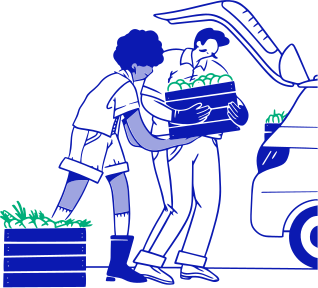
We prefer to arrange specific days/times for food drop off. If needed, we can pick up donations, as long as it is within the East Colfax corridor. Also, please provide a heads up for how much is being donated to ensure we have space to store the items.
We prefer to arrange specific days/times for food drop off. If needed, we can pick up donations, as long as it is within the East Colfax corridor. Also, please provide a heads up for how much is being donated to ensure we have space to store the items.
ProducePedia
ProducePedia is a free resource that covers the types of fresh produce that can be delivered to food pantries. Each entry includes information on color, taste, and possible uses. People unfamiliar with the vegetable or fruit will learn how to use it, and those who are familiar with it still might learn a fun fact or two!
The Cooperative Extension sites have a wealth of information for any backyard gardener. Once you go to the site (each one if very different from the others) look for a link for “homes and gardens”, “landscape”, “consumer horticulture”, etc. to find information on improving your backyard garden. Neighboring state sites may offer information your own state’s site lacks.